
Choosing the right rug size is one of the most impactful decisions you can make in a room — and one of the most commonly got wrong. We have distilled everything you need to know, including some honest advice on why we only offer two sizes of our handmade rugs.
Our rugs — made by hand, made to last
Every rug in the COKU collection is handmade by skilled artisans using traditional techniques. No two are identical, and that is the point. The subtle variations in texture and tone that come from the handmaking process are what give each rug its character and warmth. We source natural fibres and work with makers who take the time to do things properly. These are not fast-fashion floor coverings — they are pieces that will anchor a room for years.
Why we only offer two sizes
We have looked carefully at the data, listened to our customers, and made a deliberate decision: we only list our rugs in the two sizes people actually need. Everything else was either too small to work properly in a real room, or so large it rarely made sense for a home setting.
The honest truth? The single most common mistake people make when buying a rug is ordering one that is too small. A rug that barely fits under the coffee table, or sits like a postage stamp in the middle of a dining room, does not just look wrong — it can actually make a room feel smaller and more disjointed than no rug at all.
So we removed the smaller options entirely. If you are choosing between two sizes, always go bigger. You will not regret it.
160 × 230 cm
Works well in smaller living rooms, under a dining table for four to six, or in a bedroom alongside a king-size bed. A solid starting point — but if you are unsure, go large.
190 × 290 cm — our most popular
Suits open-plan living spaces, larger dining rooms, and generous bedroom layouts. This size makes a room — it anchors furniture, defines zones, and feels intentional.
The interior design rules for rugs
Get these right and your rug will transform a room. Get them wrong and it will look like an afterthought.
Keep at least 45–60 cm from the wall
A rug that runs close to the skirting boards makes a room feel small and boxed in. That visible strip of floor around the edge acts as a frame — it makes the rug look intentional and gives the room space to breathe.
Furniture legs on the rug, not floating beside it
In a seating area, at least the front legs of your sofa and chairs should sit on the rug. A rug that no furniture touches at all — the classic floating rug mistake — creates visual disconnection and makes the whole area feel unanchored.
Under a dining table: go bigger than you think
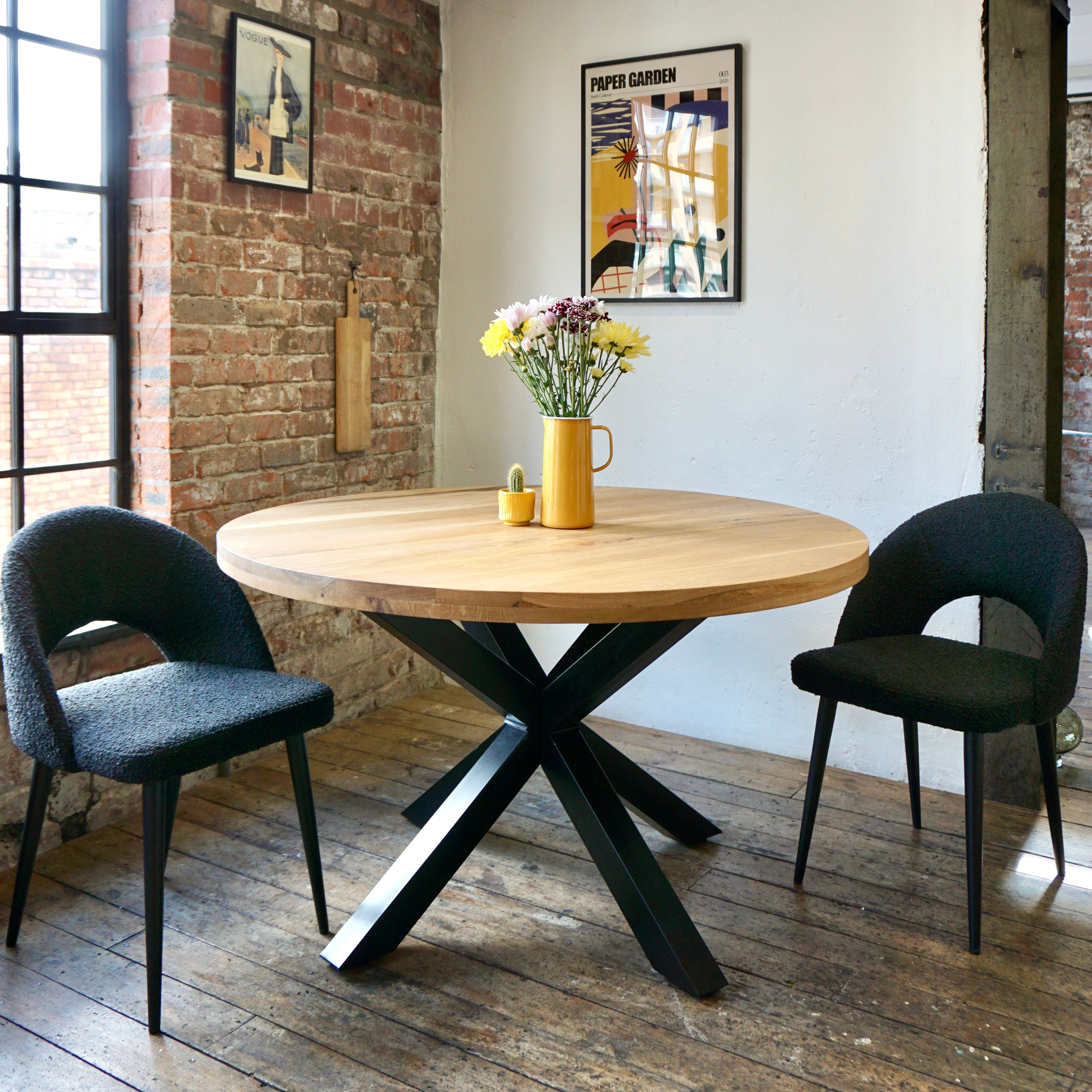
The rug should extend at least 60 cm beyond each side of the table so that chairs remain on the rug when pulled out. A rug that chairs constantly scrape on and off will look wrong immediately.
In a bedroom: extend 60 cm beyond the bed
There is nothing worse than stepping out of bed onto cold bare floor. A rug should extend at least 60 cm on either side of the bed, so your feet land on something warm and soft every morning.
A small rug makes a room feel smaller
Counter-intuitive but true. A generously sized rug that respects the proportions of a room creates a sense of spaciousness. A too-small rug draws attention to how little floor it covers and disrupts the whole composition.
"When in doubt between two sizes, always choose the larger one. In ten years of helping customers furnish their homes, we have never once heard someone say their rug was too big."
Go bigger. Always.
Your room will thank you for it.